
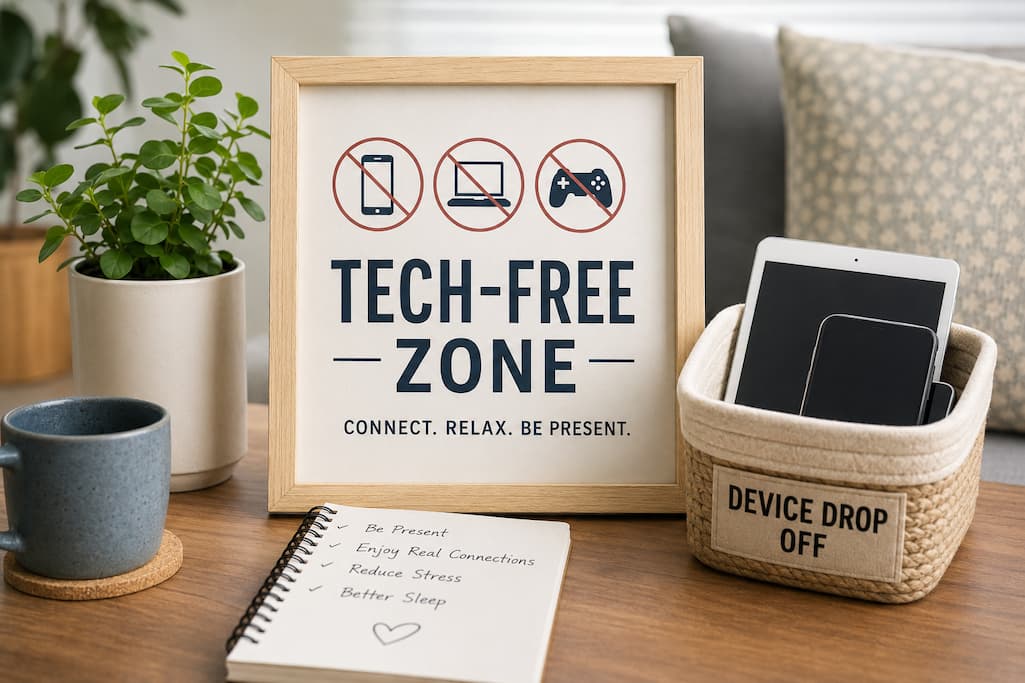
Screens have quietly become part of almost every moment at home. Phones, tablets, laptops, and televisions are now used from morning until night, often without people realizing how much time is spent on them. It usually starts with something small like checking messages or watching a short video, but slowly it becomes a habit that fills every free moment. Many people scroll while eating, keep videos running in the background, or check notifications even during conversations. Over time, this constant screen use can reduce real communication, disturb sleep patterns, and make it harder for the mind to rest properly. The home, which should feel calm and peaceful, can start to feel busy and distracting. Creating tech-free zones at home is a simple and practical way to bring balance back into daily life. In this guide to creating tech-free zones at home, you will learn why this problem happens and how to solve it in a natural and easy way.
Why This Problem Happens
The main reason screens take over home life is convenience. Phones are always within reach, and they offer instant entertainment, communication, and information. Because everything is available in one device, people naturally turn to it during any free moment. Over time, this creates a habit where reaching for a phone becomes automatic, even when there is no real need. Another reason is how apps are designed. Many apps are built to keep users engaged with endless content, notifications, and suggestions. This makes it hard to stop once you start using them. At home, where people feel relaxed, they are even more likely to use screens without thinking. Slowly, every room becomes a place where devices are present. This is how screen use spreads into daily life and reduces real-world interaction. Understanding this helps explain why creating tech-free zones at home is important for restoring balance.
First Simple Fix
The easiest way to start creating tech-free zones at home is to choose one small area and make it completely screen-free. It could be the dining table, a corner of the living room, or even the bed area. The key is to start small so the change feels easy instead of overwhelming. When one space becomes screen-free, it sends a clear message to the mind that this area is meant for rest, conversation, or focus without distractions. At first, it may feel unusual because people are used to having their devices everywhere, but after a few days, the difference becomes noticeable. Conversations feel more natural, meals feel calmer, and the mind feels less distracted. Starting with one simple tech-free zone helps build confidence and makes it easier to expand later to other parts of the home without stress.
Check Important Settings or Causes
Most people do not realize how much their devices influence their attention through notifications and alerts. Every sound, vibration, or pop-up is designed to pull attention immediately. This constant interruption makes it harder to stay away from screens, even in areas where you want to avoid them. Checking and adjusting notification settings is an important step in reducing this problem. Another factor is habit-based usage. Many people check their phones without thinking, especially during small breaks or quiet moments. This habit slowly increases screen dependency. Understanding these patterns helps in creating realistic rules for tech-free spaces at home. For example, deciding that devices stay outside the dining area or are not used during certain hours creates structure. These small adjustments help support the idea of creating tech-free zones at home in a practical and sustainable way.
Update or Improve the System
Modern devices now come with built-in tools that can help reduce screen overuse. Features like focus modes, app timers, and notification controls are designed to give users more control over their time. Keeping devices updated ensures that these features work properly and provide the latest improvements. Updates often include better ways to manage distractions and reduce unnecessary alerts. When these tools are used correctly, they support the idea of creating tech-free zones at home by making it easier to stay away from screens during specific times or in certain areas. Instead of relying only on self-control, these features act as gentle reminders that help build better habits. Over time, using these tools consistently can make screen-free spaces feel more natural and less difficult to maintain.
Clean or Remove Unnecessary Things
Another important step in creating tech-free zones at home is reducing physical and digital clutter. Many homes have unused apps, extra devices, or charging cables in every room. These items often encourage more screen use without people noticing. For example, keeping a phone charger near the bed makes it easier to scroll at night. Removing unnecessary devices and accessories from certain areas helps reduce temptation. It also makes the space feel more peaceful and organized. When a room is free from digital clutter, it naturally feels like a place meant for rest or focus instead of screen use. This small change can have a big impact on behavior over time. A cleaner environment supports the goal of creating tech-free zones at home and helps people stick to healthier habits without constant effort.
Extra Tips to Prevent the Problem
Maintaining tech-free zones becomes easier when small habits are built into daily life. One helpful approach is to replace screen time with simple offline activities like reading, talking, or spending quiet time with family. Another important habit is setting clear expectations for when and where devices can be used. Consistency plays a big role because habits form over time through repetition. At first, it may feel difficult to avoid screens in certain areas, but with regular practice, it becomes more natural. It also helps when everyone in the household follows the same approach. When all members support the idea of creating tech-free zones at home, the change feels more balanced and less like a restriction. Over time, these habits create a healthier relationship with technology and improve daily life.
Conclusion
Technology is a helpful and important part of modern life, but it should not control every part of the home. Creating tech-free zones at home is a simple and effective way to bring balance back into daily routines. It helps reduce distractions, improves communication, and creates more peaceful living spaces. By starting small, adjusting settings, using built-in tools, and removing unnecessary clutter, anyone can build a healthier relationship with screens. These changes do not require extreme effort, only consistency and awareness. Over time, tech-free spaces become a natural part of home life and help improve focus, relaxation, and family connection. The goal is not to remove technology completely but to use it in a more mindful and balanced way.
FAQs
1. What is a tech-free zone at home?
A tech-free zone is an area where devices like phones, tablets, and laptops are not used. It helps reduce distractions and encourages real-life interaction.
2. Where should I start creating a tech-free zone?
The best place to start is a small area like the dining table or bedroom. Starting small makes it easier to build the habit gradually.
3. Why are tech-free zones important?
They help reduce screen distractions, improve communication, and create a calmer home environment where people can relax and connect better.
4. How do I make tech-free zones successful?
Consistency is important. Everyone in the home should follow the same rules, and small habits should be practiced daily to make the change permanent.
5. Can technology still be used in other areas?
Yes, tech-free zones are about balance, not complete removal. Devices can still be used in other parts of the home.
6. How long does it take to adjust to tech-free zones?
Most people adjust within a few weeks as the habit becomes more natural and part of daily routine.