
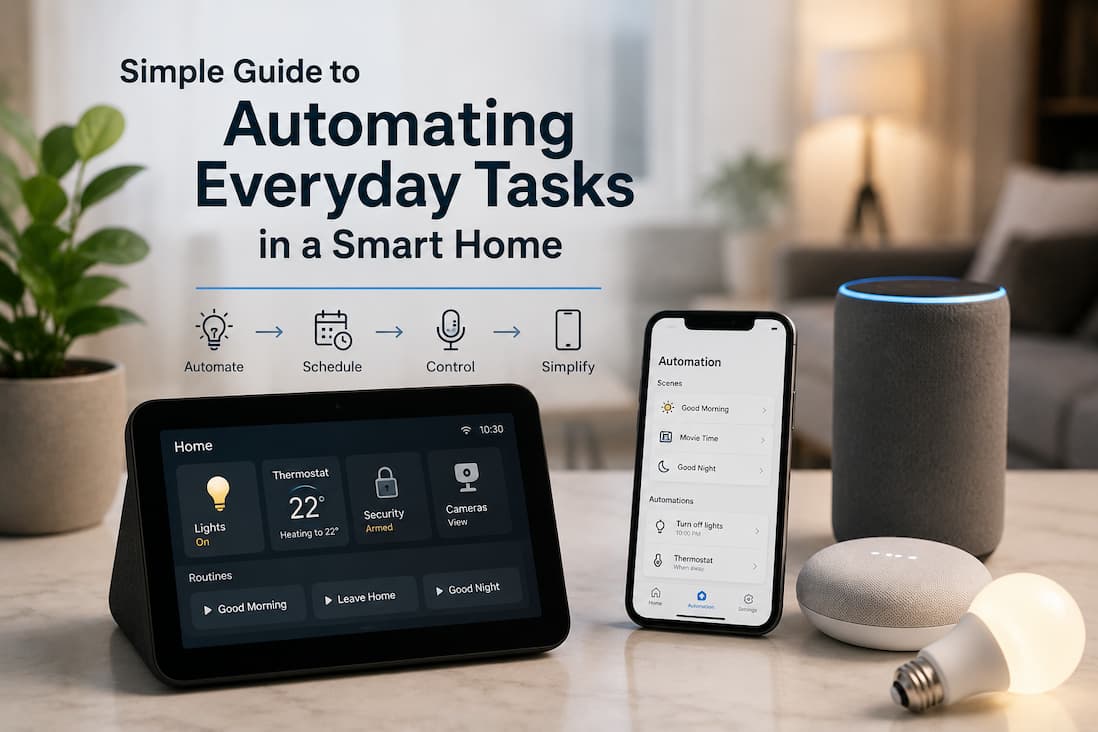
In this article, you will learn a simple guide to automating everyday tasks in a smart home in an easy and practical way. You will understand why these tasks take time, how automation works, and how to slowly build a system that saves effort, reduces stress, and makes your home life smoother and more organized.
Why This Problem Happens
Most people feel their home tasks take too much time because everything is done manually and separately. There is no connection between different activities like lighting, temperature control, or appliance usage. For example, you may wake up and turn on lights, then adjust the fan, then start your coffee machine, all in different steps. These actions seem small, but together they take attention and energy.
Another reason is that people follow habits without improving them over time. Homes are usually built for manual control, not automation, so nothing happens automatically unless you do it yourself. This creates a pattern of repeated effort every single day. Automating everyday tasks in a smart home helps solve this problem by grouping actions together. Instead of thinking about every small step, your home follows a set routine that matches your lifestyle and reduces unnecessary effort.
First Simple Fix
The easiest way to begin automating everyday tasks in a smart home is to focus on just one daily routine instead of trying to automate everything at once. Many beginners make the mistake of adding too many features quickly, which leads to confusion. A better approach is to start with one simple moment, like morning wake-up or evening relaxation.
For example, you can set lights to turn on automatically at a specific time or adjust temperature when you enter a room. This small step helps you understand how automation actually works in real life. Once you see how one task becomes automatic, it becomes easier to add more. The goal is not to build a perfect system immediately but to create small improvements that slowly save time. Even one automated action can reduce daily effort and make your routine feel more organized and less stressful.
Check Important Settings or Causes
When setting up automating everyday tasks in a smart home, many people overlook important settings that affect how everything works. These settings include time schedules, device connections, and permissions that allow devices to communicate with each other. If even one setting is incorrect, your automation may not work properly or may behave unexpectedly.
Another common issue is using devices that are not fully connected to the same system, which creates delays or missing actions. Some users also forget to check basic configurations like power settings or app permissions, which can block automation features. Understanding these small details is important because smart home systems depend on accuracy. When everything is set correctly, your devices respond smoothly and without delay. Taking time to check these settings ensures that your system works in the background without problems and supports your daily routine in a reliable and consistent way.
Update or Improve the System
Keeping your system updated is an important part of automating everyday tasks in a smart home because updates often improve performance and fix hidden issues. Many devices receive regular improvements that make automation faster, smoother, and more stable. If updates are ignored, your system may become slow or less reliable over time. Improving your setup also means reviewing your habits and adjusting routines when needed. Your daily schedule today may not be the same as it was a few months ago, so your smart home should also change with it.
Small adjustments like changing timings or adding new triggers can make a big difference. A well-maintained system does not feel complicated; instead, it feels natural and supportive. When you keep improving your setup step by step, automating everyday tasks in a smart home becomes more effective and continues to save time without extra effort.
Clean or Remove Unnecessary Things
A smart home system works best when it is simple and free from unnecessary settings. Over time, people often add too many automations or forget old ones that are no longer useful. This creates confusion and can even slow down the system. Cleaning your setup is an important part of automating everyday tasks in a smart home because it helps keep everything clear and efficient. You should regularly review what your system is doing and remove actions that no longer match your routine.
For example, you might have old schedules that no longer fit your lifestyle or devices that you no longer use. Removing these extra settings makes your system easier to manage and improves performance. A clean setup also helps you understand your automation better. Instead of dealing with complexity, you get a smooth system that focuses only on what truly matters in your daily life.
Extra Tips to Prevent the Problem
To keep automating everyday tasks in a smart home working smoothly, it is important to follow simple habits that prevent future issues. One helpful habit is to avoid adding too many automations at once, as this can make the system confusing and harder to manage. Another useful step is to regularly observe how your routines behave in daily life and adjust them when needed. It also helps to keep your system aligned with your real lifestyle instead of copying complex setups that do not match your needs.
Simplicity is always more effective than complexity when it comes to home automation. You should also make sure your devices stay connected properly and continue working together without interruptions. When you maintain a balanced and simple setup, automating everyday tasks in a smart home becomes more reliable, helping you save time and reduce stress in your daily routine.
Conclusion
Automating everyday tasks in a smart home is not about using advanced technology or complex systems but about making small improvements that make daily life easier. When your home starts handling simple actions automatically, you save time and reduce the effort needed for routine tasks. The key is to start small, check your settings carefully, and slowly build a system that fits your lifestyle. It is also important to keep your setup updated and remove anything unnecessary to avoid confusion. Over time, these small steps create a smooth and efficient home environment. A well-planned smart home does not feel complicated; it feels helpful and natural. With the right approach, you can build a system that supports your daily life, improves comfort, and makes your home more organized without adding extra work.
FAQs
1. What does automating everyday tasks in a smart home mean?
It means setting up your home devices so they perform daily actions automatically without needing manual control. This can include lighting, temperature, or appliance management based on your routine.
2. Is it difficult to start automating everyday tasks in a smart home?
No, it is not difficult if you start with simple steps. Beginners should focus on one routine at a time and slowly expand as they become more comfortable with the system.
3. Which tasks are best to automate first in a smart home?
Simple tasks like turning lights on or off, adjusting room temperature, or setting timers are good starting points because they are easy to manage and understand.
4. Can automating everyday tasks in a smart home save energy?
Yes, it can help reduce unnecessary usage by turning devices off when not needed or adjusting settings based on your routine, which can lead to more efficient use of resources.
5. Do smart home systems need constant monitoring?
Not usually. Once set up properly, they work automatically in the background. However, occasional checks help ensure everything continues to function correctly.
6. Can I improve my smart home system over time?
Yes, smart home systems are flexible. You can always add new automations, remove old ones, and adjust settings to match changes in your daily life.